Small Studio Wall Art Layout Ideas That Make Your Walls Look Bigger
Introduction
Living in a small studio or compact apartment often means limited wall space, lower ceilings, and tight corners. Yet, properly used wall art isn’t just decoration—it’s a powerful tool to optically expand your walls, elevate your space, and make the room feel larger than it really is. In this post, you’ll learn layout ideas, design strategies, and sizing rules crafted especially for small studios. We’ll use high-volume long-tail keywords like studio wall art layout ideas, artwork to make walls look bigger in small apartment, how to arrange gallery wall in small studio, best wall art placement small room, and more, so this post can help you rank well AND convert visitors into buyers.
Why Layout & Placement Matter in Small Studios
Before jumping into ideas, it’s important to understand why layout and placement of wall art are critical in small spaces:
- Small rooms have less margin for error: art that is too high, too low, or badly spaced can make walls feel crowded.
- The right layout can lead the eye outward or upward, creating illusions of space.
- Well-scaled art complements your furniture, rather than overwhelming it.
- Strategic placement can enhance natural light, reflectivity, and visual flow.
Design tips from sources like “How To Make Your Room Look Bigger With Wall Art” emphasize hanging art higher and using multi-panel pieces (diptychs, triptychs) to spread visual weight without clutter. See now
Key Principles for Making Walls Appear Bigger
| Principle | What It Means | How It Impacts Perception of Space |
|---|---|---|
| Scale & Proportion | Art should relate to furniture and wall size (not too tiny, not too massive) | Proper proportion creates harmony; art that’s too large can feel oppressive, too small feels lost |
| Orientation & Shapes | Vertical pieces elongate; horizontal pieces widen; mixtures allow balance | Helps manipulate perceived height vs width of a wall |
| Spacing & Alignment | Consistent gaps; aligning centers or edges; avoiding cluttered layouts | Clean visuals give room to “breathe” which reduces feeling of cramped space |
| Light & Reflection | Light artwork, metallic or reflective frames, or adjacent mirrors | Reflection and light make walls recede visually, brightens corners |
| Focal Points | One statement piece or centralized cluster before adding secondary art | Gives viewers something to “settle on” rather than scanning random small items |
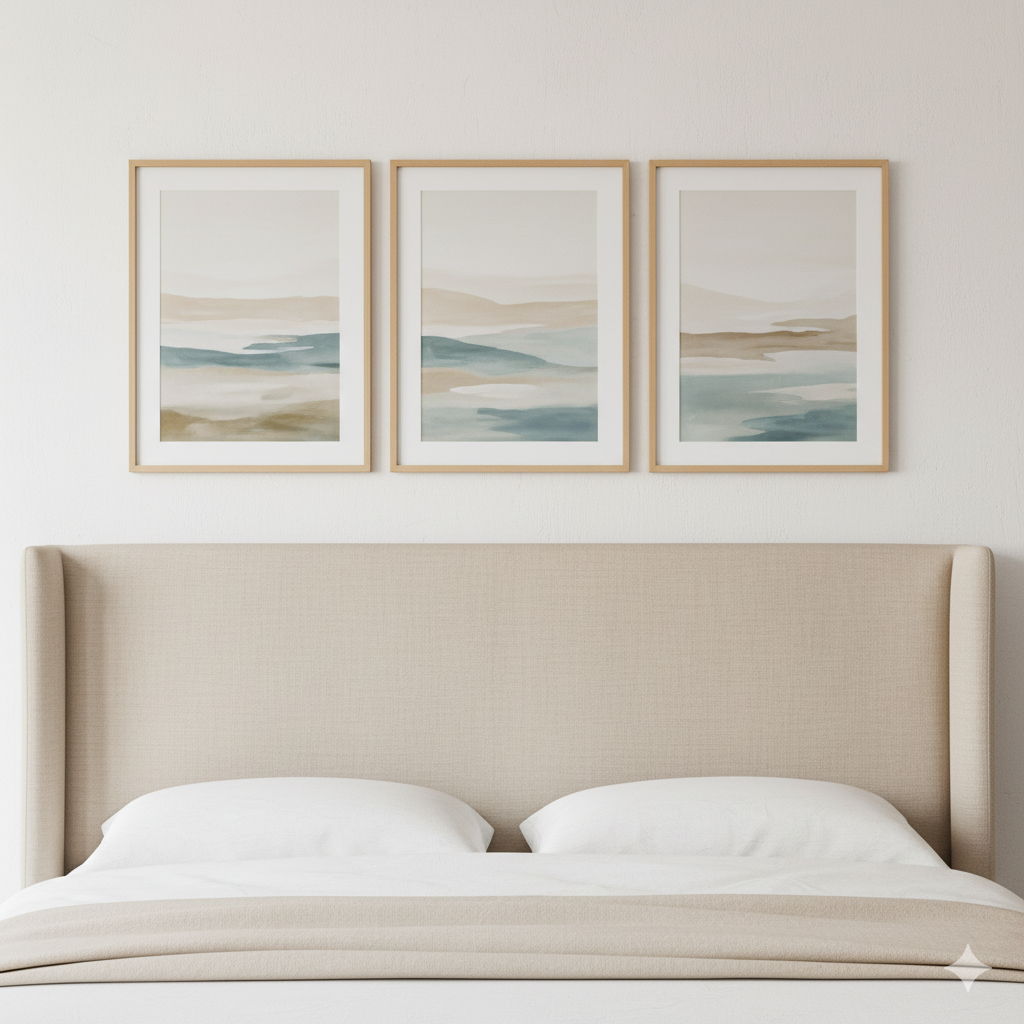
Layout Ideas to Make Walls Look Bigger in Studio Apartments
Why Wall Art Layout Matters in Small Studios
Here are creative, tested layout ideas with angles that small studio dwellers search for. These include gallery walls, statement pieces, etc.
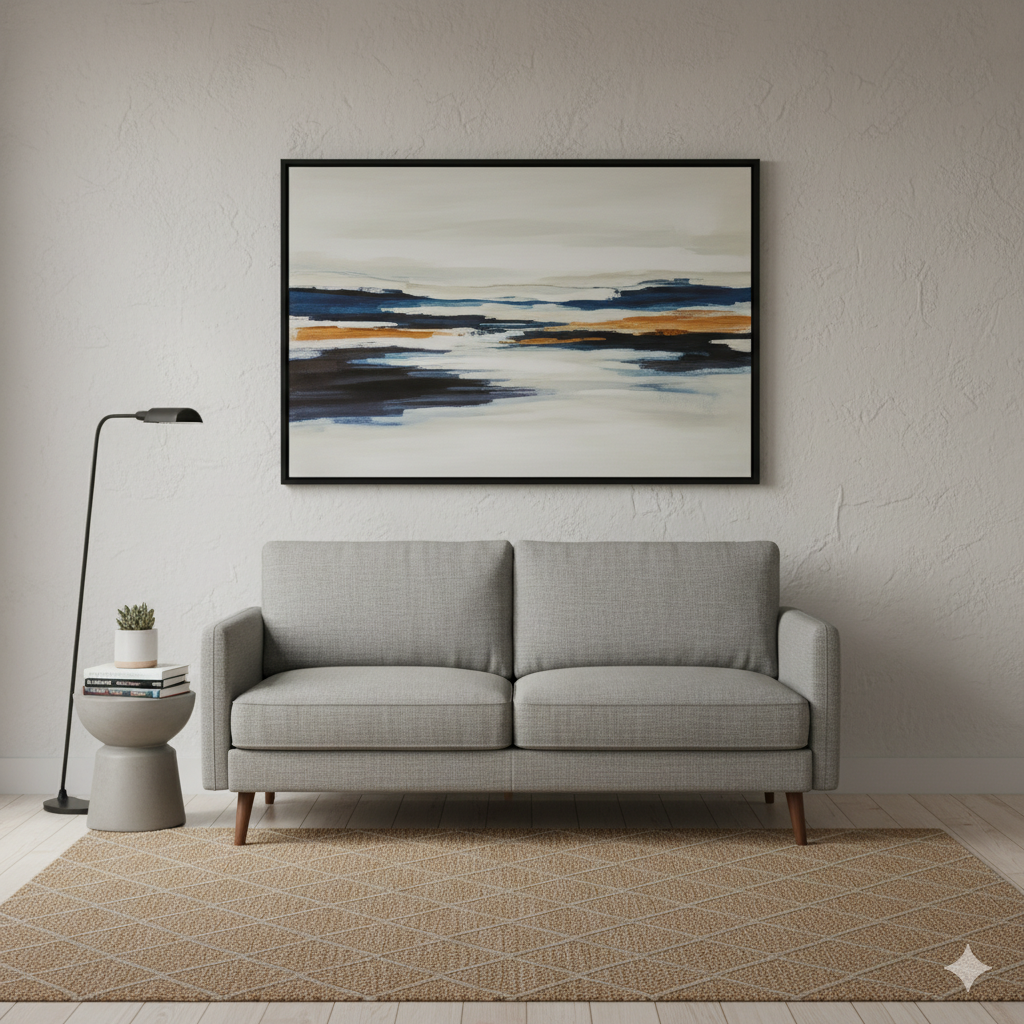
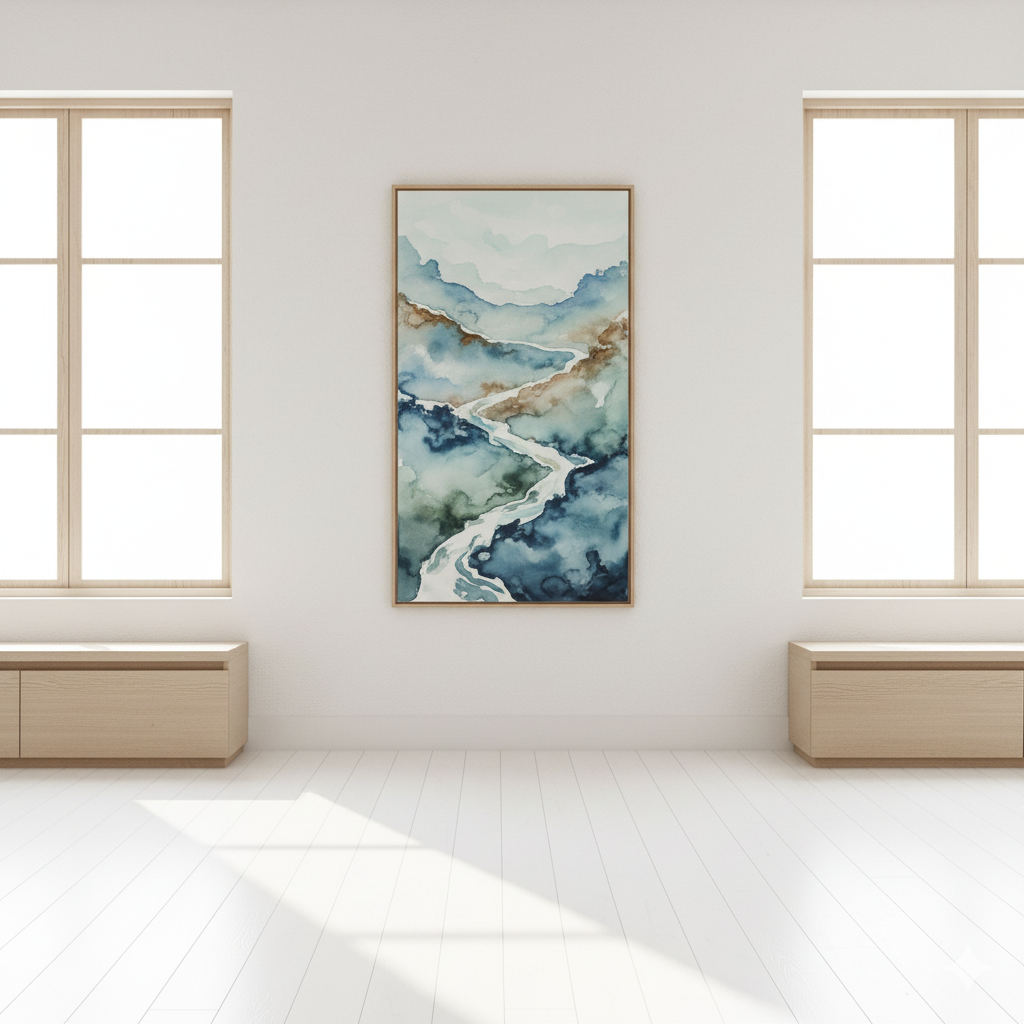
1. Single Large Statement Piece Above Key Furniture
Large wall art above sofa small studio, oversized canvas for studio apartment
- Pick one large canvas or framed artwork that spans ~ 60-75% of the width of your major furniture piece (e.g. sofa, bed, dining table).
- Hang so the bottom edge is about 6-12 inches above the furniture top. This grounds the art and creates a balanced visual.
- If your ceiling is low, opt for horizontal piece to stretch the wall sideways rather than adding height.
This layout avoids clutter and lets the art work amplify perceived space with negative space around it. Sources on similar strategies show that a large—you might think too large—statement piece often works better than multiple small items that create visual “noise.” See now
2. Diptych & Triptych Panels
Triptych wall art small room, diptych art layout for studio apartment
- A diptych (two panels) or triptych (three panels) splits a larger image or theme across multiple pieces.
- Keep even spacing between the panels (usually 2-4 inches).
- Align them either at the center or along a common top/bottom line for visual cohesion.
- Position so they’re hung at eye level (center of panels ~ 57-60 inches from floor).
This layout draws the eye horizontally across the wall, giving a sense of extended width. It also works well above furniture or along longer, narrow walls. This blog suggests using triptychs/diptychs to stretch visual flow in small rooms. See now
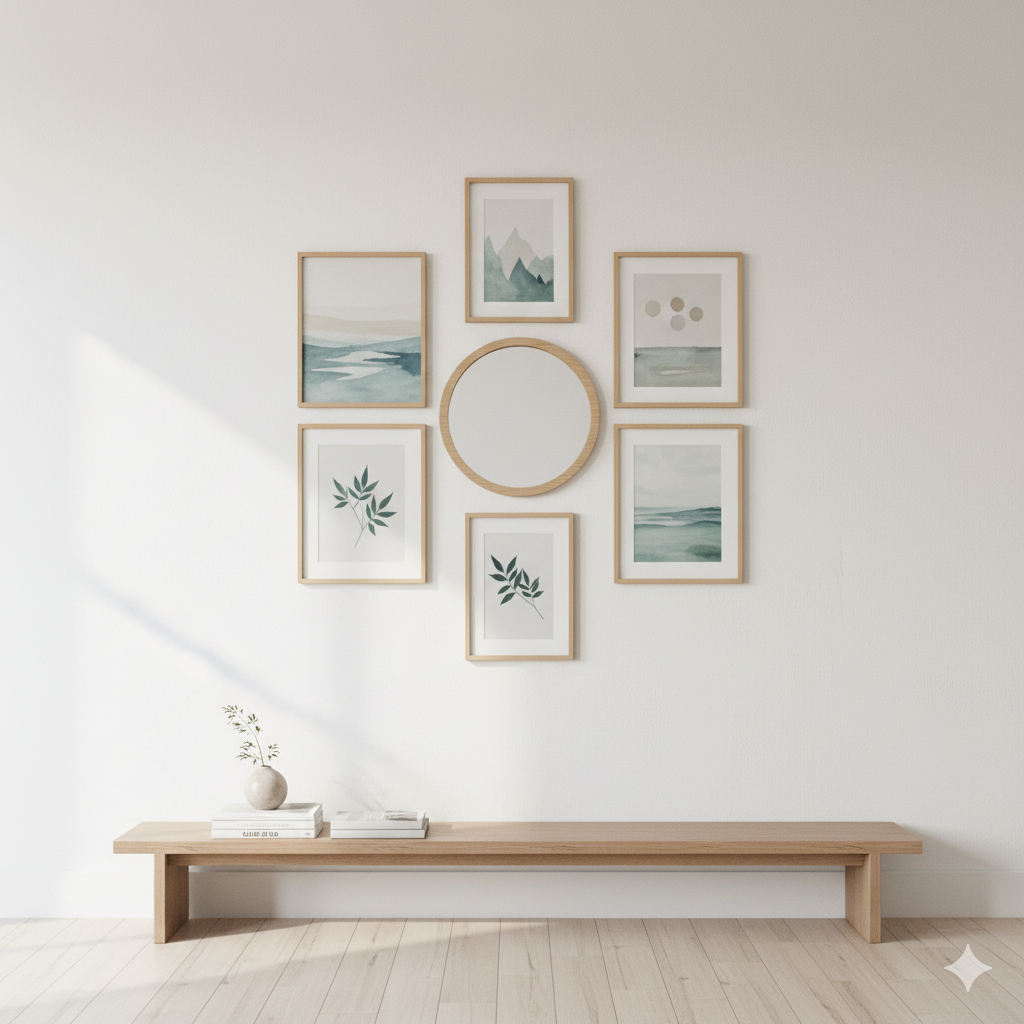
3. Gallery Walls: Fill Width & Height Smartly
Gallery wall small studio layout ideas, arrange multiple art pieces small apartment wall
- Fill out the wall’s usable width (~60-75%) and extend towards the ceiling without touching it. The edges of the gallery should leave margin from the ceiling and adjoining walls.
- Use consistent spacing between frames — typical gaps are 2-5 inches.
- Combine different frame sizes, but maintain a theme (same color frames or mats) for coherence.
- Consider offset gallery (asymmetrical) for visual interest without needing perfect symmetry.
Gallery walls help break up blank walls while avoiding the “crowded, chaotic” look. They are a favorite for studio residents who want personality and depth. See now

4. High Hang & Vertical Arrangement
Hang art high small studio ceiling high illusion, vertical art narrow wall small apartment
- Hang artwork higher than what might feel “normal”—placing the top edge closer to the ceiling to draw the eye upward.
- Use tall vertical prints (portrait orientation) on narrow wall strips (e.g. between windows, doors). This visually elongates the wall.
- Alternatively, hang multiple vertical pieces in sequence (vertical strip gallery) to give a sense of height.
Wallsauce and other sources echo that hanging wall art a few centimeters higher than standard creates a perception of taller walls. See now
5. Mirrors Mixed With Art for Light & Depth
mirror wall art small room, mix mirrors and art to make room look bigger
- Use mirrors as part of your art layout: either standalone large mirrors or mirror pieces framed similarly to your artwork.
- Position mirror opposite or adjacent to windows or light sources to reflect light and view.
- Combine art + one mirror to reduce monotony and increase visual space.
Mirrors are a classic design trick, and when integrated into the wall art layout, they add brightness and depth. Veranito and other design blogs recommend combining mirrored frames or hanging art near mirrors for doubling effect. See now
6. Light Colors, Muted Frames & Negative Space
Light colored art small apartment, minimalist frame small studio
- Use artwork with lighter backgrounds (creams, pale blues, soft neutrals) to keep the wall from feeling heavy.
- Frame styles should be slim, simple, with minimal ornament. Overly thick or dark frames add visual weight.
- Leave negative (empty) space around your art layout — avoid packing art to every inch of wall.
Cool, light tones recede visually; muted frames and spacing help maintain clean lines. GreathomeDepot suggests that using cool hues and monochromatic schemes helps recede wall surfaces, making rooms feel larger. See now

Practical Tips & Sizes
- Test layouts with painter’s tape or butcher paper: trace where each piece will hang before purchasing or installing hardware.
- Eye level & proportional size: aim for center of your artwork or gallery cluster to be ~ 57-60 inches from floor. If above furniture, leave ≈ 6-12 inches of gap from the furniture top.
- Common size ranges for small studios: LocationTypical Wall or Furniture WidthSuggested Artwork LayoutAbove small sofa (~60-72 in)60-72″One 40-55″ wide statement piece, or triptych where each panel ~ 18-22″Narrow strip between door/window~30-40″Vertical art ~ 10-14″ wide × 30-40″ tall, or stacking narrow pans verticallyWall over bed (queen size)~60″Two medium prints or one large horizontal canvas, leaving margin on both sidesBlank wall without furniture anchorEntire wall width minus marginGallery wall spanning ~60-75% width; frames of varied sizes
Common Mistakes to Avoid
- Hanging art too low or too high, which disrupts visual flow.
- Using too many small art pieces without an anchor piece — leads to clutter and chaos.
- Dark, heavy-framed pieces dominating small space; frames should complement not compete.
- Not considering light sources or clutter — art near shadows or in densely furnished walls will reduce visibility.
- Buying art without considering scale; something that looks good in catalog may feel too overwhelming in your studio.
FAQ
Following are some questions about Wall Art Layout in Small Studios :
Q1. What are the best wall art layout ideas for small studio apartments?
A: Some of the most effective include one large statement piece above key furniture, triptych/diptych series, gallery walls that extend toward the ceiling, vertical arrangements in narrow spaces, and mixing mirrors to reflect light. These help add perceived space without crowding.
Q2. What size artwork should I get to make my walls look bigger?
A: Aim for art that spans about 60-75% of gardened wall width above furniture, or fills about 60-75% of a blank wall’s width, keeping margins. Height should allow a gap above and below so it doesn’t touch ceiling or furniture too closely.
Q3. How high should I hang art in a studio apartment?
A: The center of the art or gallery cluster should usually be about 57-60 inches from the floor. If above furniture, bottom edge should be ~ 6-12 inches above the furniture. Hanging slightly higher draws the eye up and makes ceilings feel taller.
Q4. Will using too many small prints make the room look smaller?
A: Yes – too many small pieces without a unifying theme or anchor piece can create visual noise, making the wall feel busy and the room cramped. Use an anchor piece or maintain consistent frames/colors to keep.
Conclusion
Small studio living doesn’t mean compromising on style, personality, or visual space. With well-selected and well-placed wall art, you can stretch your room’s perceived size, balance proportions, and create an environment that feels open, curated, and uplifting. Use single statement pieces, triptych/diptych layouts, vertical artwork, gallery walls with breathing space, light colors, and reflective elements. Avoid clutter, dark frames, and placing art too low.
Implement one or more of these layout ideas in your small studio: measure, test with painter’s tape/mockups, choose the right scale, and hang with intention. Over time, update or swap pieces to keep things fresh and aligned with your style.
🖋️ About Artisan Anthology
At Artisan Anthology, we curate timeless digital creations designed to inspire and elevate every part of your lifestyle. Our collection includes brand books, digital templates, recipes, ebooks, wardrobe planners, fashion guides, printable wall art, and elegant home décor designs. We also specialize in wedding cards, invitations, baby shower cards, and engagement cards, each crafted to celebrate life’s most meaningful moments.
For professionals and dreamers alike, our CV templates, guided journals, and manifestation planners are created with intention to help you tell your story beautifully and authentically.
✨ Discover our full collection of digital products here → artisananthology.xyz