
Artificial intelligence tools can now generate blog posts, research summaries, product descriptions, images, and even academic essays in seconds. While this innovation boosts productivity, it also raises a critical question:
How do you verify AI-generated content authenticity?
Whether you’re a:
- Publisher
- Teacher
- Business owner
- Journalist
- Researcher
you need reliable methods to detect, verify, and validate AI-generated content.
This elite 2026 guide provides:
✔ AI content detection methods
✔ Human vs AI writing comparison techniques
✔ Watermarking and metadata strategies
✔ Fact-checking framework
✔ Legal and ethical considerations
If you’re searching for how to check if content is AI generated or how to verify AI-written articles for accuracy, this complete resource is designed to rank and answer every angle.
Why Verifying AI Content Authenticity Matters
1. Prevent Misinformation
AI models can:
- Hallucinate facts
- Fabricate citations
- Misrepresent statistics
Verification prevents publishing false information.
2. Protect Brand Credibility
If your website publishes unverified AI content:
❌ Trust decreases
❌ Legal risks increase
3. Academic and Professional Integrity
Schools, research institutions, and publishers require:
✔ Originality
✔ Attribution
✔ Authentic authorship

What Does “AI-Generated Content Authenticity” Mean?
Authenticity verification includes:
✔ Determining whether content was AI-generated
✔ Confirming factual accuracy
✔ Validating source citations
✔ Ensuring originality
✔ Confirming author accountability
It’s not just detection — it’s validation.
How AI-Generated Content Is Created
Modern AI systems:
- Predict next words probabilistically
- Generate text using training data patterns
- Create coherent but sometimes fabricated outputs
They do not inherently verify facts unless integrated with retrieval systems.
Step-by-Step Framework to Verify AI Content
Step 1: Use AI Detection Tools (Initial Screening)
AI detection tools analyze:
✔ Writing patterns
✔ Sentence structure
✔ Probability signatures
✔ Perplexity scores
However:
⚠️ Detection tools are not 100% accurate.
Use them as a first layer, not final judgment.
Step 2: Perform Manual Linguistic Analysis
AI-generated text often:
✔ Uses repetitive phrasing
✔ Lacks personal anecdotes
✔ Avoids deep specificity
✔ Overuses transitional phrases
Look for:
Lack of emotional nuance
Generic statements
Perfect grammar consistency
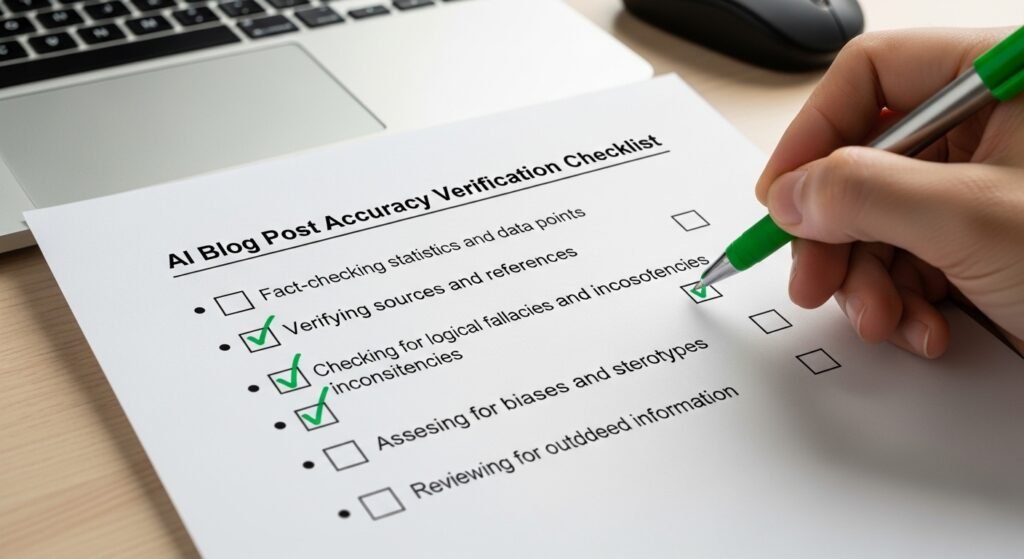
Step 3: Fact-Check Every Claim
Critical verification includes:
✔ Cross-checking statistics
✔ Validating names and dates
✔ Confirming referenced studies
✔ Checking citation legitimacy
AI sometimes invents references.
Step 4: Verify Citations and Sources
Check:
✔ Are links real?
✔ Do cited papers exist?
Step 5: Use Reverse Search for Plagiarism
AI sometimes paraphrases existing content.
Use plagiarism detection to:
✔ Identify close matches
✔ Ensure originality
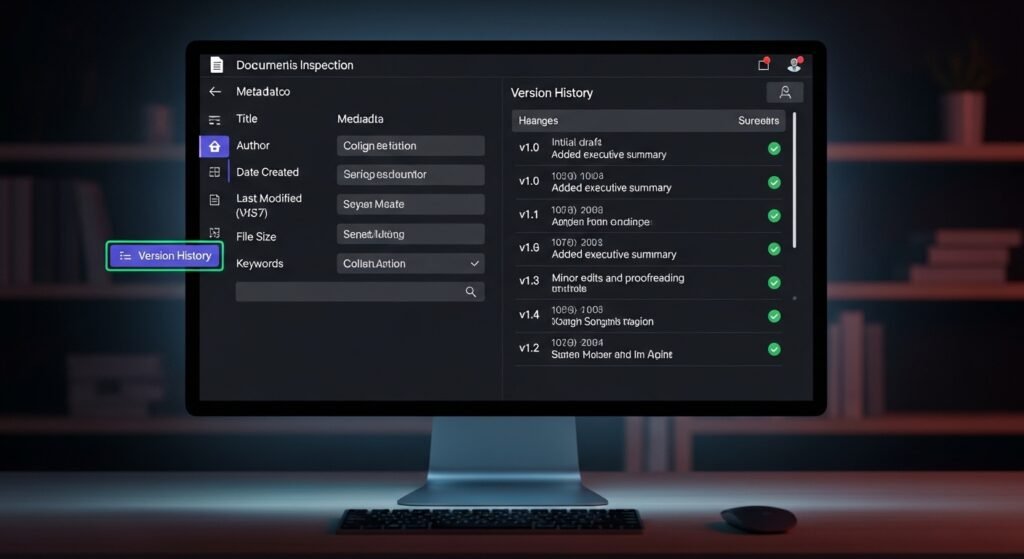
Step 6: Check Metadata and File History
In professional environments:
✔ Review document history
✔ Inspect version logs
✔ Check creation timestamps
This adds another authenticity layer.
| Method | Accuracy | Speed | Reliability |
|---|---|---|---|
| AI Detection Tools | Medium | Fast | Limited |
| Manual Review | High | Medium | Strong |
| Fact Checking | Very High | Slower | Critical |
| Plagiarism Scan | High | Fast | Important |
| Metadata Analysis | Medium | Medium | Contextual |
Advanced Verification Techniques (2026+)
1. AI Watermark Detection
Some AI systems embed:
✔ Invisible linguistic watermarks
✔ Token patterns
✔ Statistical fingerprints
Emerging verification tools can detect these markers.
2. Digital Signature and Provenance Systems
Modern content workflows use:
✔ Cryptographic signatures
✔ Blockchain timestamping
✔ Content provenance tracking
These confirm original authorship.
3. Retrieval-Based Verification
Compare AI output with:
✔ Trusted databases
✔ Academic journals
✔ Government datasets
Use retrieval tools to validate claims.
Red Flags of Unverified AI Content
🚩 Fabricated statistics
🚩 Vague references
🚩 Overconfident tone
🚩 Inconsistent facts
🚩 No named sources
🚩 Outdated information presented as current
Practical Workflow for Publishers
Content Verification Pipeline
- Run AI detection tool
- Conduct manual review
- Fact-check all statistics
- Validate sources
- Perform plagiarism scan
- Add human expertise and commentary
- Document review process
This creates defensible content integrity.
Legal and Ethical Considerations
Disclosure Transparency
Some organizations require:
✔ Disclosure of AI assistance
✔ Author accountability
Transparency builds trust.
Copyright Risks
AI-generated content may:
- Accidentally replicate copyrighted material
- Misattribute ideas
Always verify originality.
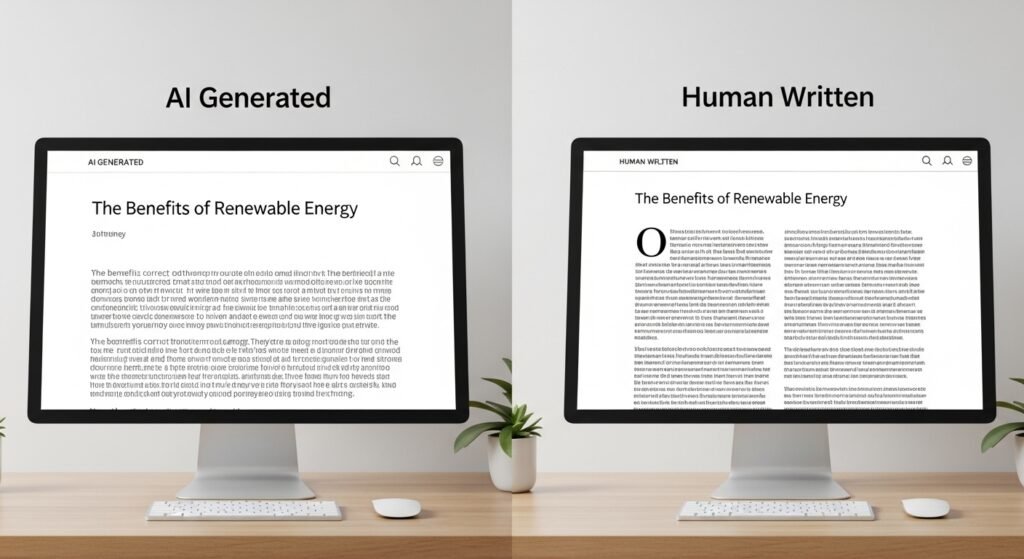
| Factor | AI-Generated | Human-Written |
|---|---|---|
| Original insight | Limited | Strong |
| Emotional nuance | Moderate | High |
| Fact reliability | Variable | Depends on author |
| Consistency | High | Variable |
| Creativity | Pattern-based | Experiential |
Common Mistakes When Verifying AI Content
❌ Relying only on AI detection scores
❌ Ignoring fact verification
❌ Trusting fabricated citations
❌ Skipping plagiarism scans
❌ Failing to add human expertise
Verification must be multi-layered.
FAQs
How can you tell if content is AI generated?
Use AI detection tools, analyze writing patterns, check metadata, and perform manual fact-checking. No single method is fully reliable.
Are AI detection tools accurate in 2026?
They are improving but still produce false positives and negatives. They should be combined with human review and factual verification.
Can AI-generated content be authentic?
Yes, if thoroughly fact-checked, edited by humans, and properly sourced. Authenticity depends on verification, not generation method alone.
How do you fact-check AI-written articles?
Cross-reference claims with reliable sources, verify statistics, confirm citations, and ensure referenced studies exist.
Should businesses disclose AI-generated content?
Disclosure policies vary, but transparency improves trust and reduces reputational risk.
Future of AI Content Verification (2026+)
Expect:
✔ Standardized AI watermark detection
✔ Provenance verification protocols
✔ Automated fact-checking systems
✔ Regulatory frameworks
Verification will become standard practice across publishing.
Action Plan: Build Your AI Content Verification System
Start today:
- Choose an AI detection tool
- Create a manual review checklist
- Fact-check all claims
- Verify sources
- Run plagiarism scan
- Add human insight
- Document verification step
Final Thoughts: Authenticity Is the New Authority
AI-generated content isn’t inherently bad — but unverified AI content is risky.
The future belongs to creators who:
✔ Use AI responsibly
✔ Verify rigorously
✔ Add human expertise
✔ Maintain transparency
In 2026 and beyond, authenticity is the ultimate ranking factor — both in search engines and in human trust.
Start building your verification workflow today. Your credibility depends on it.
✨ About Artisan Anthology
At Artisan Anthology, we curate timeless digital creations designed to inspire and elevate every part of your lifestyle. Our collection includes brand books, digital templates, recipes, ebooks, wardrobe planners, fashion guides, printable wall art, and elegant home décor designs. We also specialize in wedding cards, invitations, baby shower cards, and engagement cards, each crafted to celebrate life’s most meaningful moments.
For professionals and dreamers alike, our CV templates, guided journals, and manifestation planners are created with intention to help you tell your story beautifully and authentically.
✨ Discover our full collection of digital products here → ArtisanAnthology.xyz