
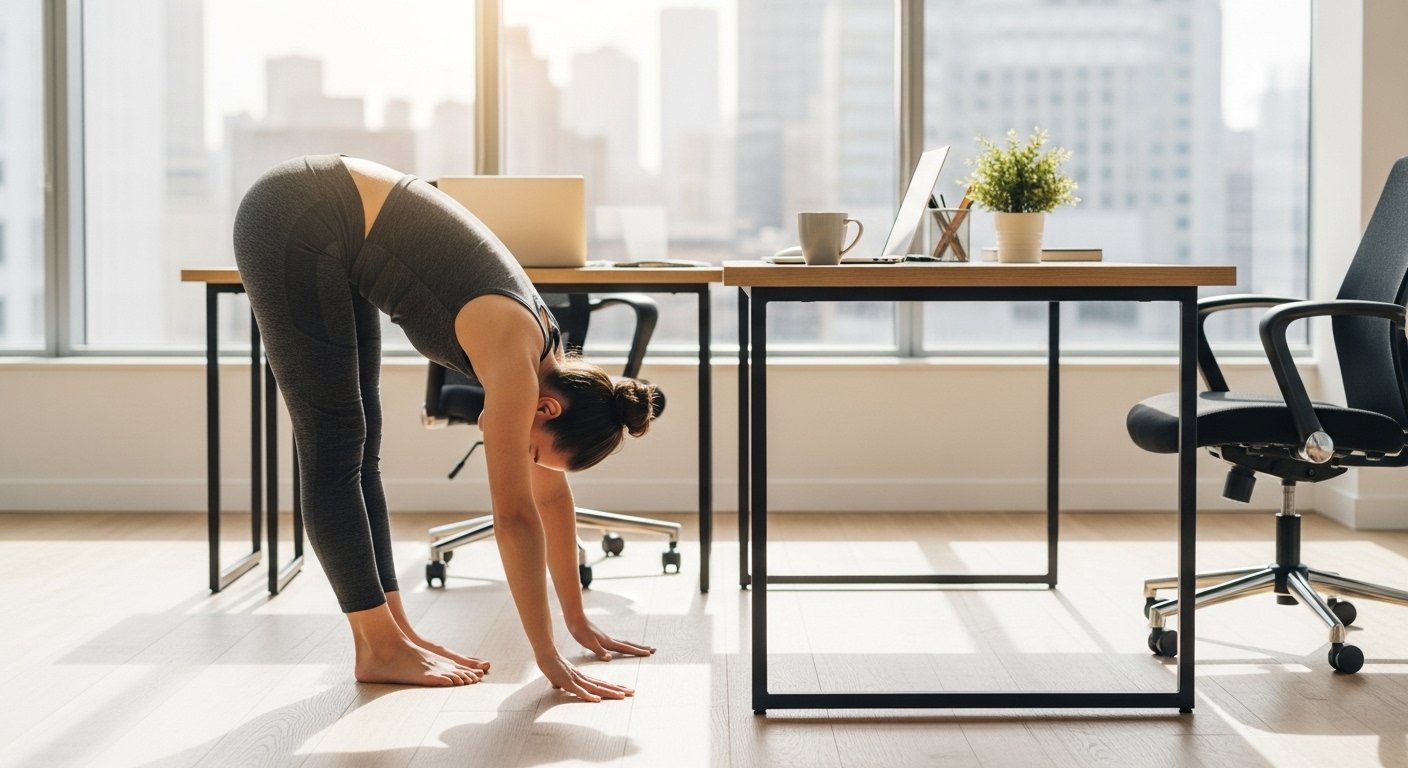
Modern work culture often requires people to spend long hours sitting at desks, staring at computer screens, and maintaining the same posture for extended periods. While this may seem harmless, prolonged sitting can lead to serious health issues such as back pain, neck stiffness, poor posture, reduced circulation, and chronic fatigue.
One of the most effective and accessible solutions is a simple yoga routine for desk workers. Yoga combines stretching, controlled breathing, and mindful movement to counteract the negative effects of sedentary work.
In this comprehensive guide, you will learn the best yoga exercises for office workers, how to create a daily routine, the benefits of desk yoga, and practical tips to maintain spinal health and productivity throughout your workday.

Why Desk Workers Need a Yoga Routine
Sitting for long hours places significant stress on the body, especially the spine, shoulders, hips, and neck.
Common problems experienced by desk workers include:
- lower back pain
- neck tension
- tight hip flexors
- rounded shoulders
- poor circulation
- mental fatigue
A targeted yoga routine for desk workers helps relieve muscle tension and restore healthy posture.
Benefits of Yoga for Desk Workers
Incorporating yoga into your daily routine offers several physical and mental benefits.
1. Improves posture
Yoga strengthens the muscles that support the spine, helping you maintain better posture while sitting.
2. Reduces back and neck pain
Stretching tight muscles relieves tension caused by prolonged sitting.
3. Boosts energy levels
Yoga increases blood circulation and oxygen flow, reducing fatigue.
4. Enhances focus and productivity
Mindful breathing techniques improve mental clarity and reduce stress.
5. Prevents repetitive strain injuries
Regular stretching keeps joints and muscles flexible, reducing injury risk.
Key Muscle Areas Desk Workers Should Stretch
A desk yoga routine should focus on muscles most affected by prolonged sitting.
Neck and shoulders
Typing and looking at screens often causes tightness in these areas.
Lower back
The lumbar spine absorbs significant pressure when sitting for long periods.
Hips and hip flexors
Sitting shortens hip flexor muscles, leading to stiffness and discomfort.
Hamstrings
Tight hamstrings can contribute to lower back pain.
Best Yoga Routine for Desk Workers (Step-by-Step)
These beginner-friendly yoga poses can be performed at home or even during short office breaks.
1. Seated Neck Stretch
This simple stretch releases tension from the neck.
How to perform:
- Sit upright in your chair.
- Slowly tilt your head toward one shoulder.
- Hold for 10–15 seconds.
- Repeat on the opposite side.
Benefits:
- reduces neck stiffness
- improves mobility
2. Seated Cat-Cow Stretch
This movement improves spinal flexibility.
Steps:
- Sit tall with feet flat on the floor.
- Inhale and arch your back slightly while lifting your chest.
- Exhale and round your spine while tucking your chin.
- Repeat for 5–10 breaths.
Benefits:
- relieves back tension
- improves posture
3. Seated Spinal Twist
Twisting movements help maintain spinal mobility.
Steps:
- Sit upright.
- Place your right hand on the back of your chair.
- Twist gently to the right.
- Hold for 10–20 seconds.
- Repeat on the other side.
Benefits:
- releases lower back tension
- improves spinal flexibility
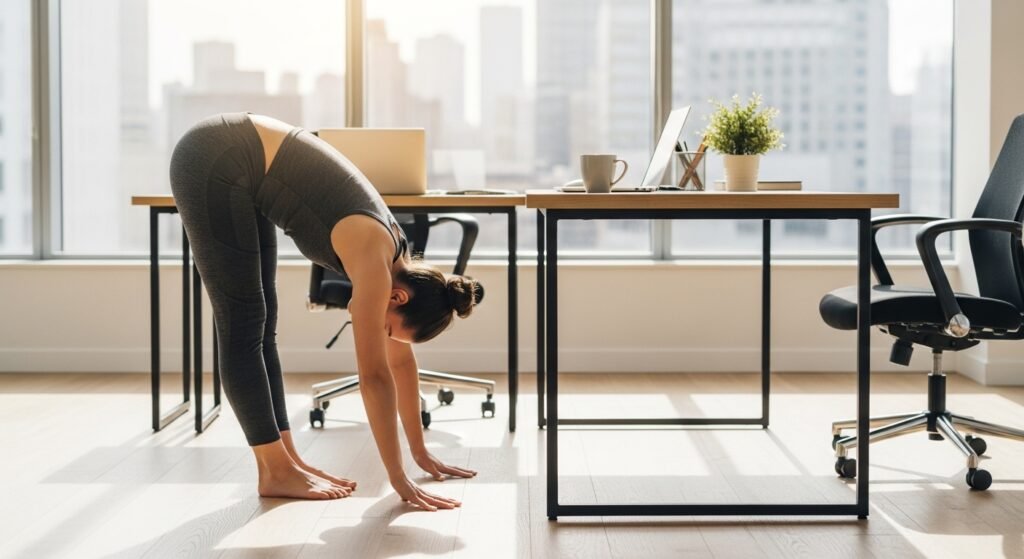
4. Standing Forward Fold
This pose stretches the back and hamstrings.
Steps:
- Stand up from your chair.
- Bend forward slowly from your hips.
- Let your arms hang toward the floor.
- Hold for 20 seconds.
Benefits:
- relieves spinal compression
- improves circulation
5. Shoulder Roll Stretch
This exercise helps counteract rounded shoulders.
Steps:
- Sit or stand upright.
- Roll your shoulders forward 5 times.
- Roll them backward 5 times.
Benefits:
- reduces shoulder stiffness
- improves posture
6. Hip Flexor Stretch
Tight hips are a common problem for desk workers.
Steps:
- Step one foot forward into a lunge position.
- Lower the back knee slightly.
- Hold for 20 seconds.
- Switch sides.
Benefits:
- releases hip tension
- improves lower back comfort
Comparison Table: Sedentary Desk Routine vs Desk Yoga Routine
| Factor | Sedentary Work Routine | Yoga-Enhanced Work Routine |
|---|---|---|
| Posture | Poor and slouched | Improved alignment |
| Muscle tension | High | Reduced |
| Energy levels | Low | Increased |
| Focus | Often distracted | Improved mental clarity |
| Injury risk | Higher | Lower |
This comparison shows how small daily movement habits can dramatically improve well-being.
Practical Tips for Desk Workers Practicing Yoga
Practice short sessions regularly
Even 5–10 minutes of yoga can make a noticeable difference.
Take movement breaks
Follow the 30–minute rule:
Stand or stretch every 30 minutes.
Adjust your workstation
Combine yoga with ergonomic improvements:
- raise monitor to eye level
- keep feet flat on the floor
- maintain neutral wrist position
Focus on breathing
Deep breathing improves oxygen flow and helps relieve stress.
Practice slow inhales and exhales during each stretch.
Quick 10-Minute Yoga Routine for Busy Desk Workers
Morning routine:
- neck stretch (1 minute)
- cat-cow stretch (2 minutes)
- spinal twist (2 minutes)
Midday routine:
- shoulder rolls (2 minutes)
- standing forward fold (2 minutes)
End-of-day routine:
- hip flexor stretch (1 minute each side)
This simple routine keeps the body active throughout the workday.

Frequently Asked Questions
Can yoga help reduce back pain from sitting?
Yes. Yoga stretches release muscle tension, improve spinal alignment, and strengthen core muscles that support the back.
How often should desk workers practice yoga?
Desk workers should perform short yoga sessions at least once every 1–2 hours, even if only for a few minutes.
Do I need special equipment for desk yoga?
No. Most desk yoga exercises can be performed using just a chair and open space.
Can yoga improve posture for office workers?
Yes. Regular yoga strengthens the muscles responsible for posture and reduces the habit of slouching.
Is desk yoga suitable for beginners?
Yes. Most desk yoga poses are simple, gentle, and beginner-friendly.
Common Mistakes Desk Workers Make
Ignoring early pain signals
Minor discomfort can develop into chronic pain if ignored.
Sitting too long without breaks
Even perfect posture cannot replace regular movement.
Performing stretches too quickly
Slow, controlled movements provide better results.
Long-Term Benefits of Desk Yoga
Over time, a daily yoga routine can lead to:
- stronger back muscles
- improved flexibility
- reduced workplace fatigue
- better mental focus
- improved posture
These improvements contribute to long-term physical health and productivity.
Conclusion: Start Your Desk Yoga Routine Today
Spending long hours at a desk doesn’t have to damage your health. By incorporating a simple yoga routine designed for desk workers, you can relieve muscle tension, improve posture, and boost your energy throughout the day.
The key is consistency. Even short daily sessions can dramatically improve how your body feels after long hours of sitting.
Start by adding a few stretches during your work breaks and gradually build a routine that fits your schedule.
Your body will thank you for making yoga part of your daily work routine.
✨ About Artisan Anthology
At Artisan Anthology, we curate timeless digital creations designed to inspire and elevate every part of your lifestyle. Our collection includes brand books, digital templates, recipes, ebooks, wardrobe planners, fashion guides, printable wall art, and elegant home décor designs. We also specialize in wedding cards, invitations, baby shower cards, and engagement cards, each crafted to celebrate life’s most meaningful moments.
For professionals and dreamers alike, our CV templates, guided journals, and manifestation planners are created with intention to help you tell your story beautifully and authentically.
✨ Discover our full collection of digital products here → ArtisanAnthology.xyz