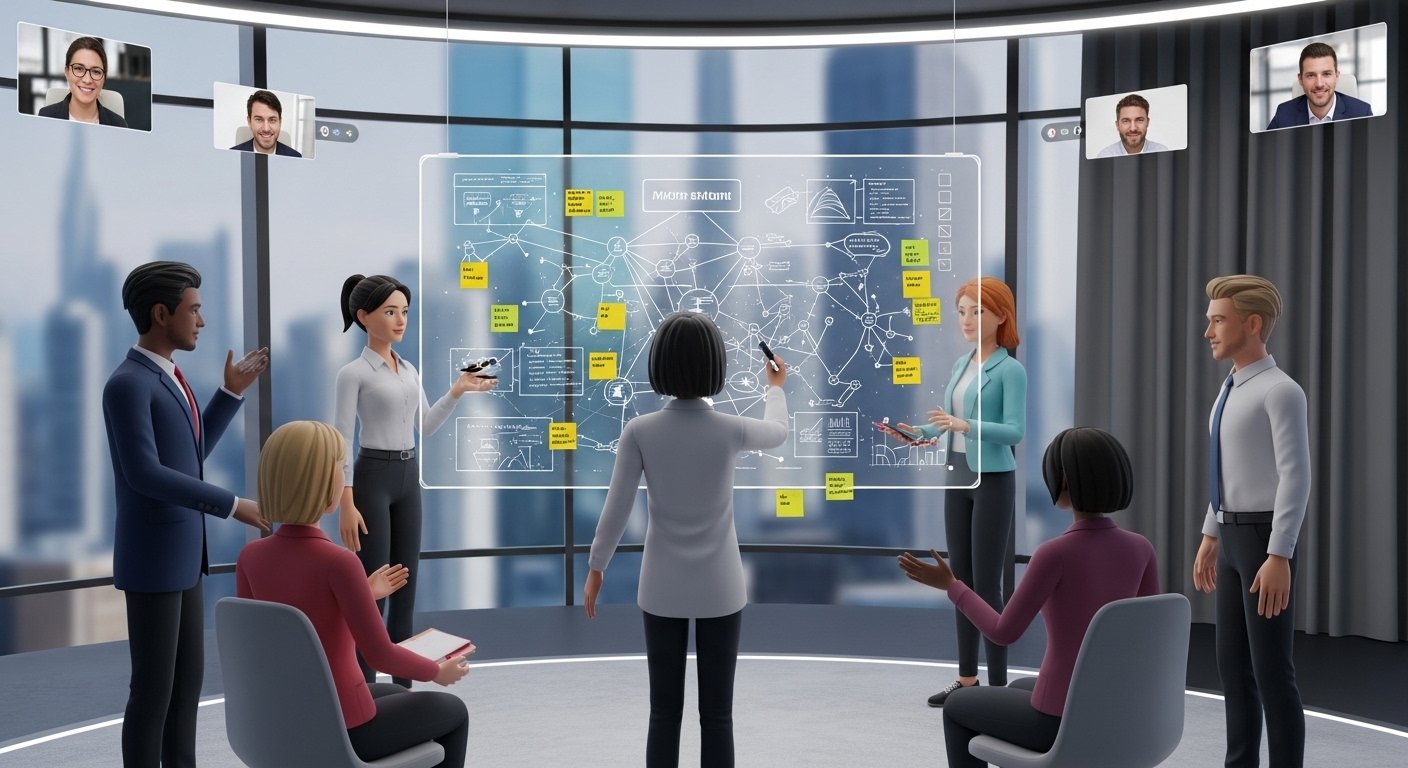
Remote work is evolving beyond video calls. VR and AR headsets for remote meetings are transforming how teams collaborate by creating immersive virtual workspaces, realistic avatars, and spatial presentations.
If you’re tired of:
❌ Zoom fatigue
❌ Flat screen meetings
❌ Low engagement
then VR/AR collaboration tools can deliver:
✔ Presence and eye contact
✔ 3D whiteboards and screens
✔ Virtual offices
✔ Better focus and productivity
This guide compares the best VR and AR headsets for remote meetings in 2026, with practical buying advice and setup tips.

Why Use VR/AR for Remote Meetings?
Key Benefits
1. Real Presence
Spatial audio and avatars simulate face-to-face interaction, improving communication.
2. Multi-Screen Productivity
Work with multiple virtual monitors without physical hardware.
3. 3D Collaboration
Teams can:
✔ Sketch in 3D
✔ Review prototypes
✔ Present spatial data
4. Reduced Context Switching
Stay inside one immersive workspace instead of switching apps.
Types of Headsets for Remote Work
VR Headsets
Best for:
✔ Fully immersive meetings
✔ Virtual offices
✔ Deep focus work
AR/Mixed Reality Headsets
Best for:
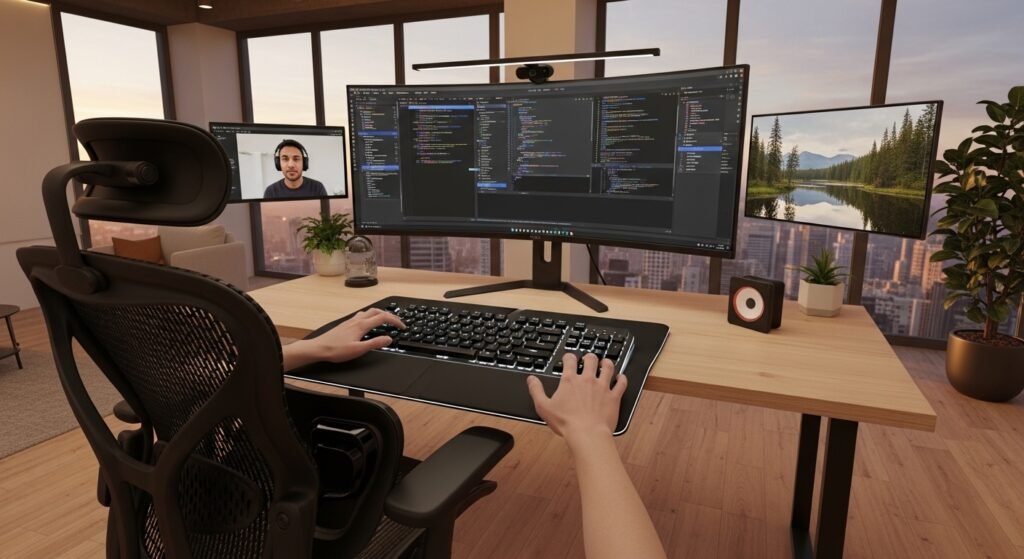
✔ Blending real desk with virtual screens
✔ Long work sessions
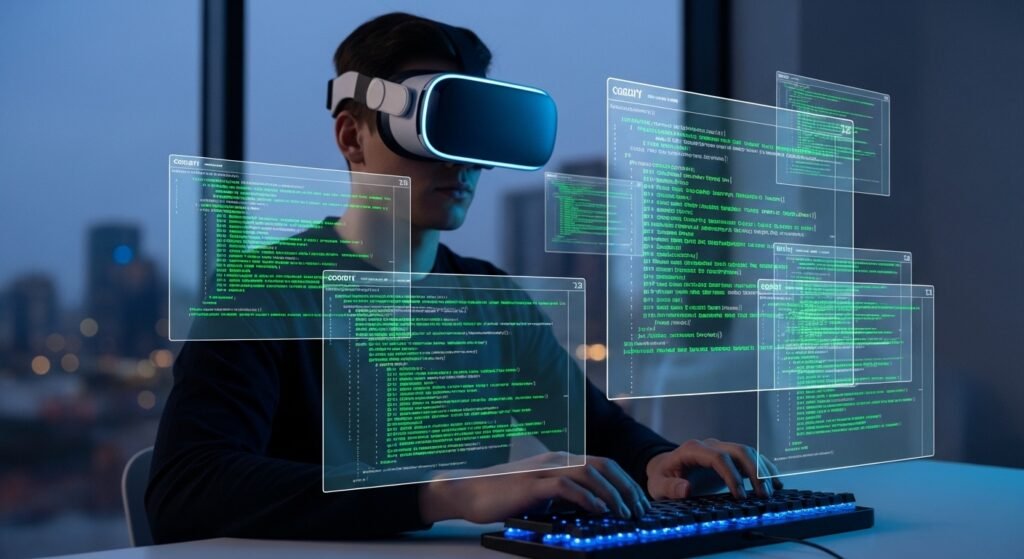
✔ Physical keyboard + virtual monitors
Top VR/AR Headsets for Remote Meetings (2026)
1. Standalone VR Collaboration Headsets
Best for:
✔ All-in-one meetings
✔ No PC required
✔ Virtual offices
Strengths:
- Easy setup
- Built-in collaboration apps
- Hand tracking
Limitations:
- Lower text clarity than AR for long documents
2. Mixed Reality Productivity Headsets
Best for:
✔ Multiple virtual screens
✔ Coding, writing, analytics
✔ Long work sessions
Strengths:
- High-resolution displays
- Passthrough for real desk
- Keyboard visibility
Limitations:
- Higher cost
3. PC-Tethered VR Headsets
Best for:
✔ High-performance 3D collaboration
✔ Design teams
✔ Simulation meetings
Strengths:
- Powerful graphics
- Large virtual environments
Limitations:
- Requires gaming PC
- Less portable
VR/AR Headsets Comparison Table
| Feature | Standalone VR | Mixed Reality | PC VR |
|---|---|---|---|
| Setup | Very easy | Easy | Complex |
| Text clarity | Medium | High | High |
| Portability | High | Medium | Low |
| Virtual monitors | Yes | Excellent | Yes |
| PC required | No | Optional | Yes |
| Best for | Meetings | Productivity | 3D teams |
Long-Tail Keywords Integrated
This guide targets:
- best vr headset for remote meetings 2026
- ar headset for virtual monitors productivity
- vr collaboration tools for remote teams
- mixed reality for remote work setup
- virtual office vr headset comparison
- vr meetings vs zoom productivity benefits
- immersive remote work technology guide
- vr headset for coding and multiple screens
Best Use Cases for VR Meetings
Daily Team Meetings
Immersive rooms increase engagement.
Brainstorming Sessions
Use 3D whiteboards and sticky notes.
Client Presentations
Present slides on virtual screens.
Design Reviews
Walk through 3D models together.
Hardware Features That Matter
1. Display Resolution
Higher resolution = better text readability.
Look for:
✔ High pixels per degree (PPD)
✔ Sharp passthrough cameras
2. Comfort for Long Sessions
Choose headsets with:
✔ Balanced weight
✔ Adjustable straps
✔ Breathable face padding
3. Hand Tracking & Controllers
Hand tracking improves:
- Natural gestures
- Whiteboard interaction
4. Battery Life
For remote work:
✔ Minimum 2–3 hours per session
5. Keyboard and Desk Visibility
For productivity, you need:
✔ Passthrough view
✔ Tracked keyboard support
Software Platforms for VR Meetings
Popular collaboration environments include:
✔ Virtual meeting rooms
✔ Spatial whiteboards
✔ Screen sharing in 3D
✔ Avatar-based communication
Choose platforms that support:
- File sharing
- Real-time collaboration
- Cross-device access
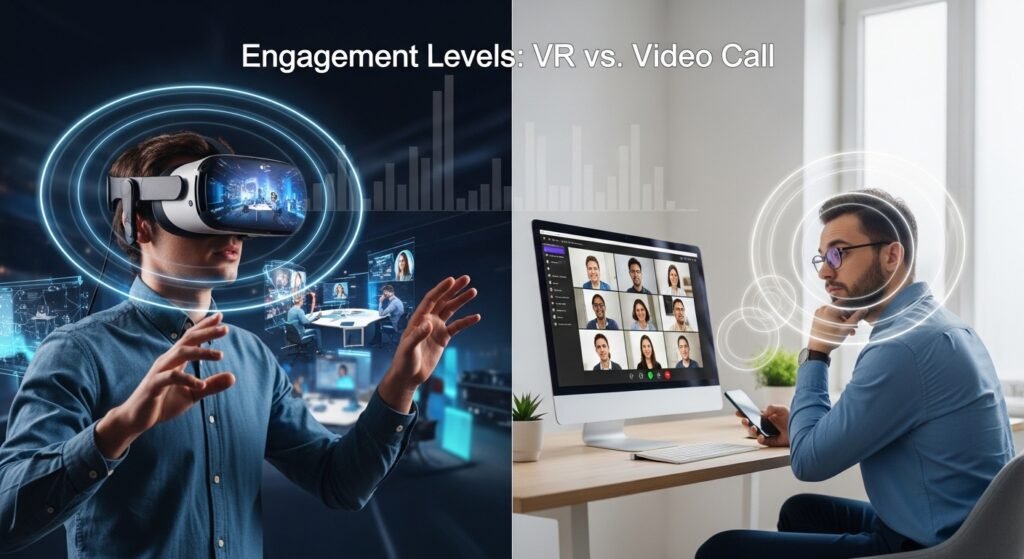
VR vs Traditional Video Call
| Feature | VR Meetings | Video Calls |
|---|---|---|
| Engagement | High | Medium |
| Presence | Strong | Low |
| Multi-screen work | Yes | Limited |
| Fatigue | Lower | Higher |
| Hardware cost | Higher | Low |
Practical Setup Guide
Step 1: Define Your Use Case
✔ Meetings only → Standalone VR
✔ Coding & analytics → Mixed reality
✔ 3D design → PC VR
Step 2: Optimize Workspace
✔ Quiet area
✔ Good lighting for passthrough
✔ Comfortable chair
Step 3: Configure Virtual Screens
Create:
- Main monitor
- Reference screen
- Chat window
Step 4: Use Spatial Audio
Improves meeting clarity and focus.
Step 5: Schedule VR Sessions Strategically
Use VR for:
✔ Collaboration
✔ Brainstorming
Use laptop for:
✔ Long typing sessions
Productivity Tips for VR Remote Work
✔ Take breaks every 45–60 minutes
✔ Use ergonomic seating
✔ Adjust text size for readability
✔ Keep real keyboard aligned
Cost vs ROI
| Factor | VR/AR Meetings |
|---|---|
| Hardware cost | Medium–High |
| Travel savings | High |
| Engagement | High |
| Productivity | Increased |
For distributed teams, VR reduces travel and increases collaboration quality.
Common Mistakes to Avoid
❌ Using low-resolution headsets for text-heavy work
❌ Skipping comfort adjustments
❌ Overusing VR for all tasks
❌ Ignoring battery management
Future of VR/AR Remote Work (2026+)
Expect:
✔ AI avatars with real facial expressions
✔ Eye-tracking for realistic presence
✔ Lighter mixed reality glasses
✔ Always-on virtual workspaces
VR will become a primary remote collaboration medium.
Action Plan: Start Using VR for Remote Meetings
- Choose the right headset type
- Set up a virtual workspace
- Use VR for collaborative tasks
- Combine with traditional tools
- Train your team gradually
Adopt VR strategically — not for everything, but for high-value collaboration.
Final Thoughts: The Future of Remote Collaboration
VR and AR headsets are redefining remote work by delivering:
✔ Real presence
✔ Immersive collaboration
✔ Multi-screen productivity
✔ Reduced meeting fatigue
In 2026, the best remote teams will not just use video — they will work inside virtual environments.
Start small.
Test VR meetings once per week.
Scale as your team adapts.
The future of work is spatial, immersive, and interactive — and the right VR/AR headset will put you ahead of the curve.
✨ About Artisan Anthology
At Artisan Anthology, we curate timeless digital creations designed to inspire and elevate every part of your lifestyle. Our collection includes brand books, digital templates, recipes, ebooks, wardrobe planners, fashion guides, printable wall art, and elegant home décor designs. We also specialize in wedding cards, invitations, baby shower cards, and engagement cards, each crafted to celebrate life’s most meaningful moments.
For professionals and dreamers alike, our CV templates, guided journals, and manifestation planners are created with intention to help you tell your story beautifully and authentically.
✨ Discover our full collection of digital products here → ArtisanAnthology.xyz