
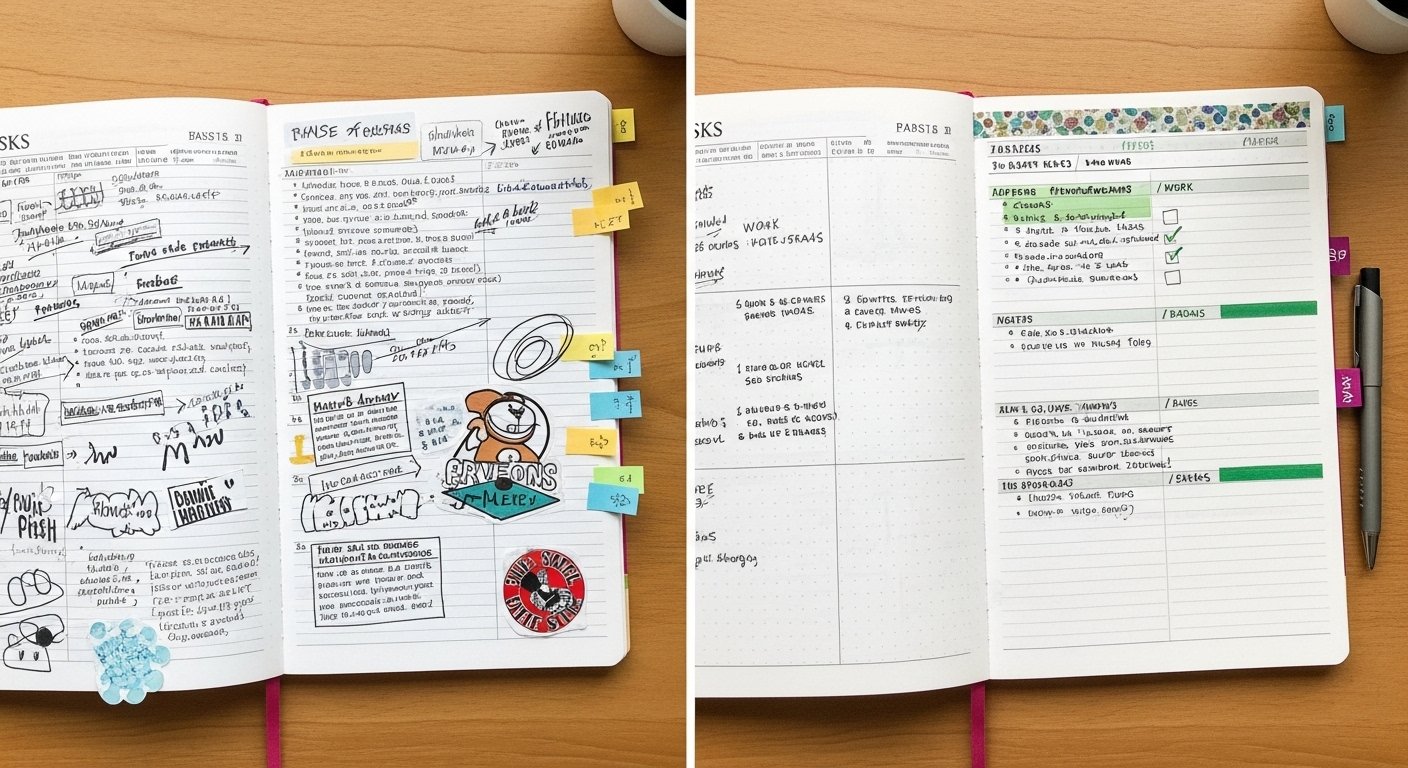
If you’ve ever opened your planner and felt overwhelmed, scattered, or unsure where to start, you’re not alone. The best way to organize a daily planner isn’t about filling every page — it’s about creating a simple, repeatable system that helps you prioritize, focus, and actually complete what matters.
In this guide, you’ll learn:
- How to structure a daily planner for productivity
- The most effective daily planner layout ideas
- A step-by-step organization system
- Time blocking vs task listing comparison
- Mistakes that ruin planner organization
- How to organize both digital and paper planners
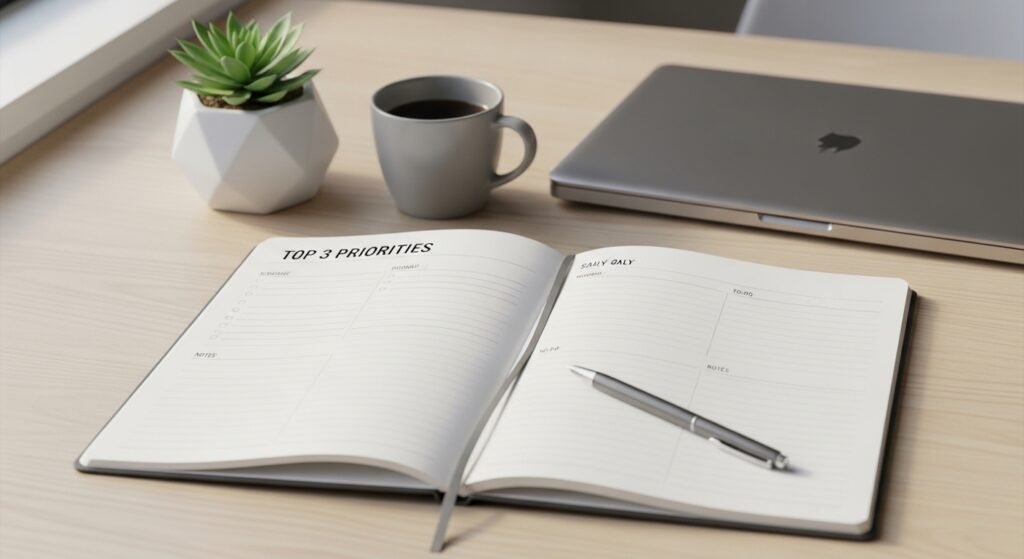
Quick Answer: What Is the Best Way to Organize a Daily Planner?
The best way to organize a daily planner is to divide your page into five essential sections:
- Top 3 Priorities
- Time-Blocked Schedule
- Task List
- Notes / Brain Dump
- Daily Reflection
This structure improves clarity, reduces overwhelm, and increases completion rates.
Now let’s break it down step-by-step.
Step 1: Start With Clear Priorities (Not a Giant To-Do List)
One of the biggest daily planner mistakes is writing 25 tasks and completing none.
Instead, ask:
What 3 tasks would make today successful?
This is called the Rule of 3 productivity method.
Why It Works:
- Reduces decision fatigue
- Improves focus
- Prevents burnout
- Creates daily momentum
Step 2: Use Time Blocking for Structure
If you’re wondering how to structure a daily planner effectively, time blocking is one of the best methods.
What Is Time Blocking?
Time blocking means assigning specific time slots to tasks.
Example:
| Time | Task |
|---|---|
| 8:00–9:00 | Morning routine |
| 9:00–11:00 | Deep work |
| 1:00–2:00 | Emails |
| 3:00–4:00 | Admin tasks |
Benefits of Time Blocking:
- Prevents multitasking
- Improves focus
- Helps estimate time realistically
- Reduces procrastination
Step 3: Keep a Secondary Task List
Your planner should have:
✔ Must-Do Tasks (Top 3)
✔ Secondary Tasks (If time allows)
This prevents overwhelm while keeping flexibility.
Pro Tip:
Use symbols:
- ⭐ Priority
- ⏳ Waiting
- → Move to tomorrow
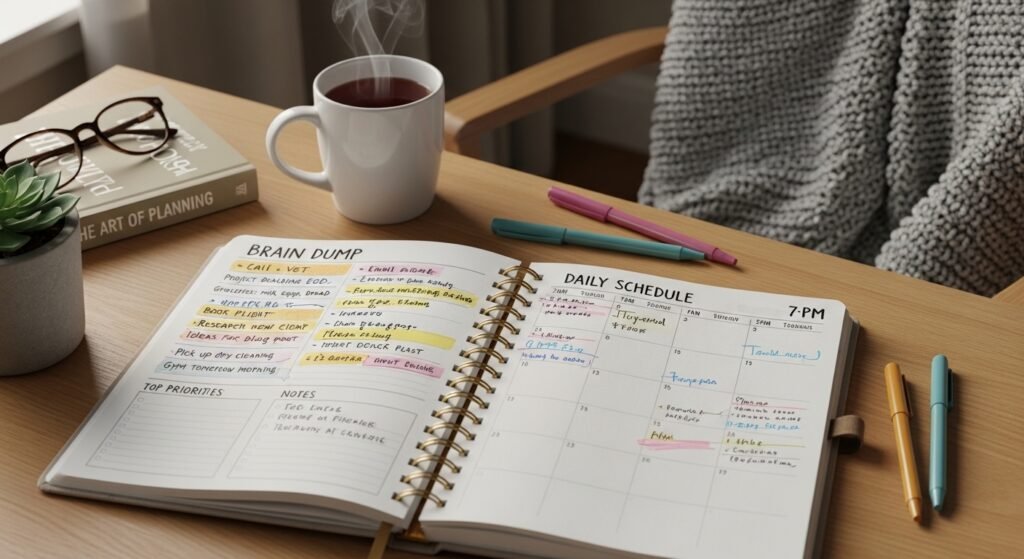
Step 4: Add a Brain Dump Section
Many people struggle with mental clutter.
A brain dump section allows you to write down:
- Random ideas
- Reminders
- Future tasks
- Appointments to schedule later
This clears your mind and reduces anxiety.
Step 5: Include a Reflection Section
At the bottom of your page, ask:
- What went well today?
- What can I improve tomorrow?
- What am I grateful for?
Daily reflection builds self-awareness and long-term productivity.
Paper vs Digital Planner Organization
Many people ask:
Is it better to organize a digital planner or a paper planner?
Here’s a comparison:
| Feature | Paper Planner | Digital Planner |
|---|---|---|
| Portability | No device needed | iPad required |
| Customization | Limited layout | Fully customizable |
| Editing | Cannot erase easily | Unlimited edits |
| Hyperlinks | No | Yes |
| Aesthetic | Handwritten feel | Clean + flexible |
| Storage | Physical space | Cloud storage |
Best choice?
It depends on your lifestyle and workflow preference.
Best Daily Planner Organization Systems Compared
| Method | Best For | Pros | Cons |
|---|---|---|---|
| Time Blocking | Structured people | Clear schedule | Less flexible |
| Task List Only | Simple planners | Easy setup | No time guidance |
| Rule of 3 | Overwhelmed planners | High clarity | Limited tasks |
| Hybrid System | Most people | Balanced approach | Slight setup time |
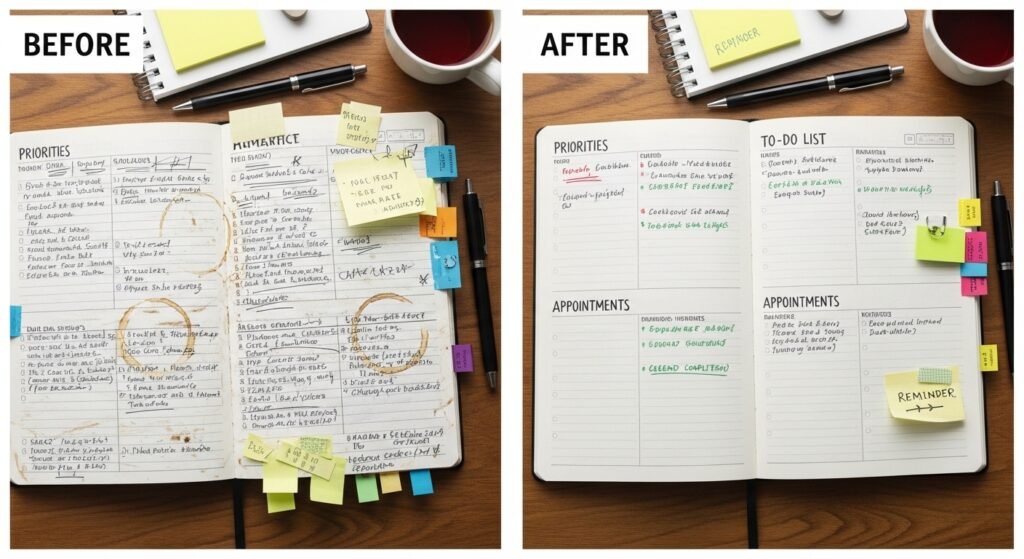
Common Mistakes That Ruin Planner Organization
Avoid these:
❌ Overloading your task list
❌ Skipping daily review
❌ Planning unrealistic schedules
❌ Not prioritizing
❌ Ignoring rest time
Planning should create clarity — not stress.
How to Organize a Daily Planner for Productivity (Step-By-Step System)
Here’s your repeatable daily system:
- Brain dump everything.
- Choose top 3 priorities.
- Block time for important tasks.
- Add secondary tasks.
- Leave buffer time.
- End with reflection.
Do this daily and you’ll notice:
- Improved focus
- Less stress
- More task completion
- Better time awareness
FAQs
What is the best way to organize a daily planner?
The best way is to divide your planner into priorities, time blocks, task list, notes, and reflection sections. This system improves focus and productivity.
How many tasks should I put in my daily planner?
Limit your top priorities to 3 tasks and add secondary tasks only if time allows. Overloading reduces productivity.
Should I time block in a daily planner?
Yes. Time blocking helps structure your day and prevents multitasking. It’s one of the most effective daily planner organization methods.
How do beginners organize a daily planner?
Beginners should start simple:
- Write 3 priorities
- Add a short task list
- Include a reflection section
- Avoid complicated layouts
Is digital or paper better for organizing a planner?
Digital planners offer flexibility and editing options, while paper planners offer simplicity and fewer distractions. Choose based on your lifestyle.
Final Thoughts: Organization Creates Momentum
The best daily planner system is not the most complicated one.
It’s the one you’ll actually use.
Start simple.
Focus on clarity.
Prioritize what matters.
Review daily.
Consistency beats complexity every time.
When you organize your daily planner effectively, you don’t just manage tasks — you design your day with intention
✨ About Artisan Anthology
At Artisan Anthology, we curate timeless digital creations designed to inspire and elevate every part of your lifestyle. Our collection includes brand books, digital templates, recipes, ebooks, wardrobe planners, fashion guides, printable wall art, and elegant home décor designs. We also specialize in wedding cards, invitations, baby shower cards, and engagement cards, each crafted to celebrate life’s most meaningful moments.
For professionals and dreamers alike, our CV templates, guided journals, and manifestation planners are created with intention to help you tell your story beautifully and authentically.
✨ Discover our full collection of digital products here → ArtisanAnthology.xyz