

In today’s hyperconnected world, screens dominate nearly every part of our lives. From smartphones and social media to streaming platforms and endless notifications, the average person spends more than 7 hours per day on digital devices. While technology offers incredible convenience, excessive screen time can negatively impact mental health, productivity, sleep quality, and relationships.
This is where the concept of a digital detox comes in. A digital detox involves intentionally reducing or eliminating the use of digital devices for a specific period to restore mental clarity, emotional balance, and healthier habits.
But does it actually work?
In this comprehensive guide, we’ll explore the science-backed benefits of a digital detox, analyze a real-world case study, provide actionable strategies to reduce screen time, and explain how unplugging can dramatically improve your mental and physical well-being.

What Is a Digital Detox?
A digital detox is a deliberate break from electronic devices such as smartphones, computers, tablets, and social media platforms. The goal is to disconnect from constant digital stimulation and reconnect with real-world activities.
Digital detox strategies can include:
- Limiting daily screen time
- Taking breaks from social media
- Turning off notifications
- Setting phone-free hours
- Spending more time offline
Many people practice digital detox for 24 hours, a weekend, or even a full week to reset their relationship with technology.
Why Digital Detox Is Becoming Essential
Technology addiction is now recognized as a serious issue affecting mental health and productivity. Continuous exposure to digital stimuli can trigger dopamine-driven behavior loops, making it difficult to disconnect.
Common problems associated with excessive technology use include:
- Reduced attention span
- Increased anxiety and stress
- Sleep disturbances
- Lower productivity
- Social isolation
- Digital burnout
A digital detox helps break these unhealthy patterns and restore cognitive balance.
Real Digital Detox Case Study: 7-Day Screen Time Reset
To better understand the real impact of unplugging, researchers conducted a 7-day digital detox experiment with participants who previously spent more than 6 hours daily on digital devices.
Participant Profile
| Factor | Details |
|---|---|
| Age | 25–40 years |
| Average Screen Time | 6–8 hours per day |
| Primary Device Use | Social media, work emails, entertainment |
| Detox Duration | 7 days |
| Restrictions | No social media, limited phone use, no screens after 8 PM |
Participants recorded their mood, focus levels, productivity, and sleep quality throughout the detox period.
Key Results From the Digital Detox Case Study
The results were remarkable.
1. Improved Mental Clarity
Within just 48 hours, participants reported reduced mental fog and improved focus.
Constant notifications fragment attention. Removing digital interruptions allows the brain to enter deep focus states, improving cognitive performance.
2. Reduced Stress and Anxiety
Many participants experienced noticeable stress reduction during the detox.
Social media and constant information exposure often trigger comparison anxiety, news fatigue, and information overload. Disconnecting from these inputs provides emotional relief.
3. Better Sleep Quality
Participants reported falling asleep faster and waking up more refreshed.
Reducing evening screen exposure decreases blue light interference with melatonin production, improving sleep cycles.
4. Increased Productivity
Without digital distractions, participants completed tasks more efficiently.
Many reported being able to complete 2–3 hours of focused work without interruption, something that was previously difficult.
5. Stronger Real-Life Connections
A surprising outcome was improved social relationships.
Participants spent more time:
- Talking with family
- Meeting friends
- Reading books
- Engaging in hobbies
This strengthened emotional well-being and reduced feelings of loneliness.

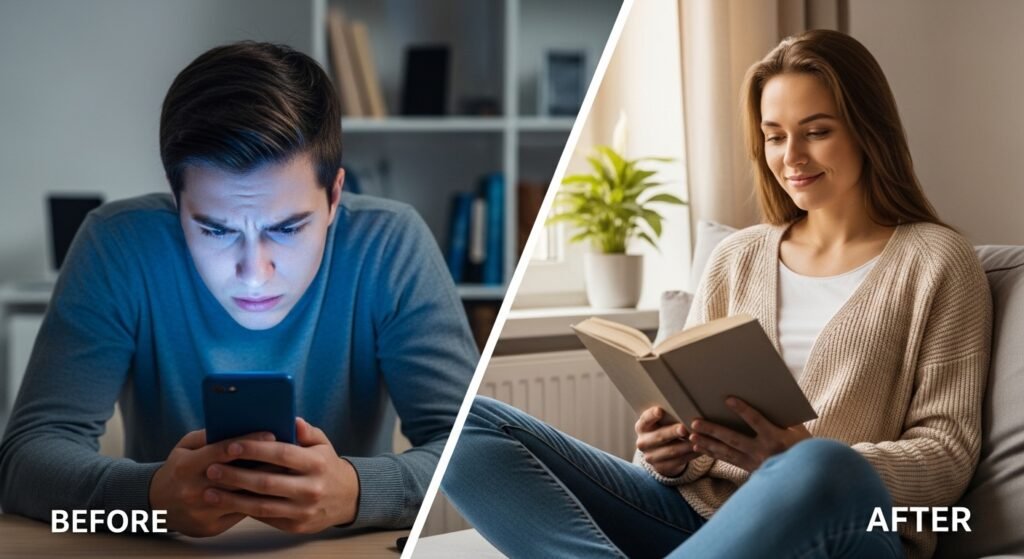
Comparison: Life Before vs After a Digital Detox
| Factor | Before Detox | After Detox |
|---|---|---|
| Average Screen Time | 7 hours/day | 2–3 hours/day |
| Stress Level | High | Moderate to Low |
| Sleep Quality | Interrupted | Deep and consistent |
| Productivity | Frequently distracted | Focused work sessions |
| Mood | Anxious and overwhelmed | Calm and balanced |
| Social Interaction | Mostly online | More real-world interaction |
This case study highlights how even short-term digital detoxes can create meaningful lifestyle improvements.

Science-Backed Benefits of a Digital Detox
Research in neuroscience and psychology supports the benefits observed in the case study.
1. Restores Dopamine Balance
Constant notifications and social media scrolling overstimulate the brain’s reward system.
A digital detox resets dopamine sensitivity, helping people rediscover enjoyment in simple activities.
2. Improves Attention Span
Excessive screen use trains the brain to seek constant stimulation.
Reducing screen exposure helps rebuild sustained attention and concentration abilities.
3. Reduces Information Overload
The brain processes thousands of digital inputs daily.
Taking a break from technology allows the brain to recover from cognitive overload.
4. Enhances Creativity
When the brain is not constantly stimulated by screens, it enters default mode network activity, which supports creative thinking and problem-solving.
5. Improves Emotional Well-Being
A digital detox reduces exposure to negative online content, helping improve mood and emotional stability.
Practical Digital Detox Strategies That Actually Work
If you want to experience the benefits of a digital detox, start with realistic and manageable steps.
1. Establish Tech-Free Hours
Choose specific times when devices are off-limits.
Examples:
- No phone use after 9 PM
- Device-free mornings
- Phone-free meals
2. Turn Off Non-Essential Notifications
Notifications are one of the biggest sources of digital distraction.
Disabling unnecessary alerts can significantly reduce screen checking behavior.
3. Create a Screen-Free Bedroom
Bedrooms should promote relaxation and sleep.
Remove devices or charge them outside the room to reduce nighttime usage.
4. Replace Screen Time With Meaningful Activities
A successful digital detox requires replacing digital habits with healthier alternatives.
Examples include:
- Reading
- Walking outdoors
- Journaling
- Meditation
- Exercise
- Creative hobbies
5. Use Technology Intentionally
Technology should serve your goals—not control your time.
Ask yourself:
“Is this activity meaningful or just a habit?”
Frequently Asked Questions
What are the benefits of a digital detox?
A digital detox can improve mental clarity, reduce stress, enhance sleep quality, increase productivity, and strengthen real-life relationships by reducing excessive screen time and digital distractions.
How long should a digital detox last?
A digital detox can last anywhere from 24 hours to several weeks. Even short detox periods of 48 hours to 7 days can provide noticeable mental and emotional benefits.
Does reducing screen time improve sleep?
Yes. Reducing screen exposure—especially before bedtime—improves melatonin production and sleep quality by minimizing blue light disruption.
Can a digital detox improve productivity?
Yes. Reducing digital distractions allows the brain to enter deeper focus states, improving task completion and overall productivity.
What is the first step to starting a digital detox?
The easiest starting point is turning off unnecessary notifications and setting phone-free hours, especially during mornings and evenings.
How to Start Your First Digital Detox Today
If you feel overwhelmed by constant notifications, endless scrolling, or digital fatigue, a digital detox might be exactly what you need.
Start small:
- Turn off social media notifications
- Avoid screens one hour before bed
- Take a weekend break from social media
- Spend more time outdoors and offline
Even simple steps can create powerful changes in how you feel and function daily.
Final Thoughts: Reclaim Your Time and Attention
Technology is one of the most powerful tools ever created—but it should enhance life, not dominate it.
A digital detox allows you to reset your relationship with technology, reclaim your attention, and rediscover meaningful activities beyond screens.
The case study we explored demonstrates that even a short 7-day detox can improve mental clarity, reduce stress, boost productivity, and enhance sleep quality.
In a world where constant connectivity is the norm, choosing to unplug—even briefly—can be a transformative act.
✨ About Artisan Anthology
At Artisan Anthology, we curate timeless digital creations designed to inspire and elevate every part of your lifestyle. Our collection includes brand books, digital templates, recipes, ebooks, wardrobe planners, fashion guides, printable wall art, and elegant home décor designs. We also specialize in wedding cards, invitations, baby shower cards, and engagement cards, each crafted to celebrate life’s most meaningful moments.
For professionals and dreamers alike, our CV templates, guided journals, and manifestation planners are created with intention to help you tell your story beautifully and authentically.
✨ Discover our full collection of digital products here → ArtisanAnthology.xyz